
- This event has passed.
Saka Dawa Mani Recitation for Ten Days
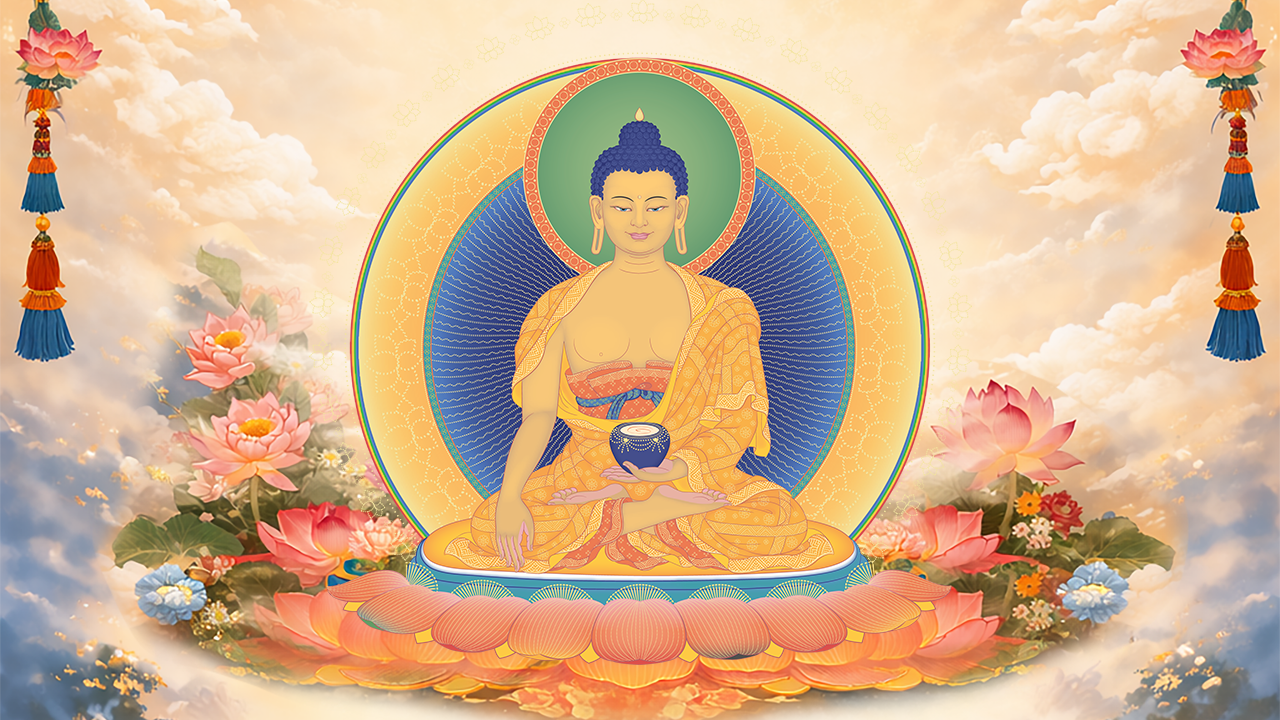
Mani Recitation and Maha Guru Bum Tsok will be offered for the benefit of all living beings, with special dedication for the long life & good health of His Holiness the 14th Dalai Lama.
Om Mani Padme Hum is the six-syllabled Sanskrit mantra of Avalokiteshvara, the Bodhisattva of Compassion, designed to cultivate wisdom, purify negative karma, and foster enlightenment. Often translated as “The Jewel in the Lotus,” it symbolizes transforming one’s impure body, speech, and mind into a pure, enlightened state through compassion.
Key Aspects of the Mantra
- Meaning: The mantra, which means “Om, the jewel in the lotus, hum,” consists of six syllables—Om-Ma-Ni-Pad-Me-Hum—that symbolize the union of compassion and wisdom.
- Symbolism: It represents the transformation of one’s impure body, speech, and mind into the pure, enlightened body, speech, and mind of a Buddha. The “jewel” represents compassion and method, while the “lotus” represents wisdom
- Significance: It is the primary mantra of Avalokiteshvara (Chenrezig), the embodiment of compassion for all beings.
- Benefits: Chanting it is said to purify negative karma, protect from suffering, and aid in achieving enlightenment.
The Six Syllables and Their Meanings
Each syllable is often associated with the purification of different negative emotions or the cultivation of a specific virtue:
- Om: Purifies the body
- Ma: Purifies speech
- Ni: Purifies the mind
- Pad: Represents wisdom
- Me: Represents compassion
- Hum: Represents the indivisible union of wisdom and compassion.
Join us for the sacred Saka Dawa celebration with prayers, offerings, and Dharma teachings.